
Blog
CBSE Class 10 Board Exam Preparation: A Complete Subject-Wise Study Strategy

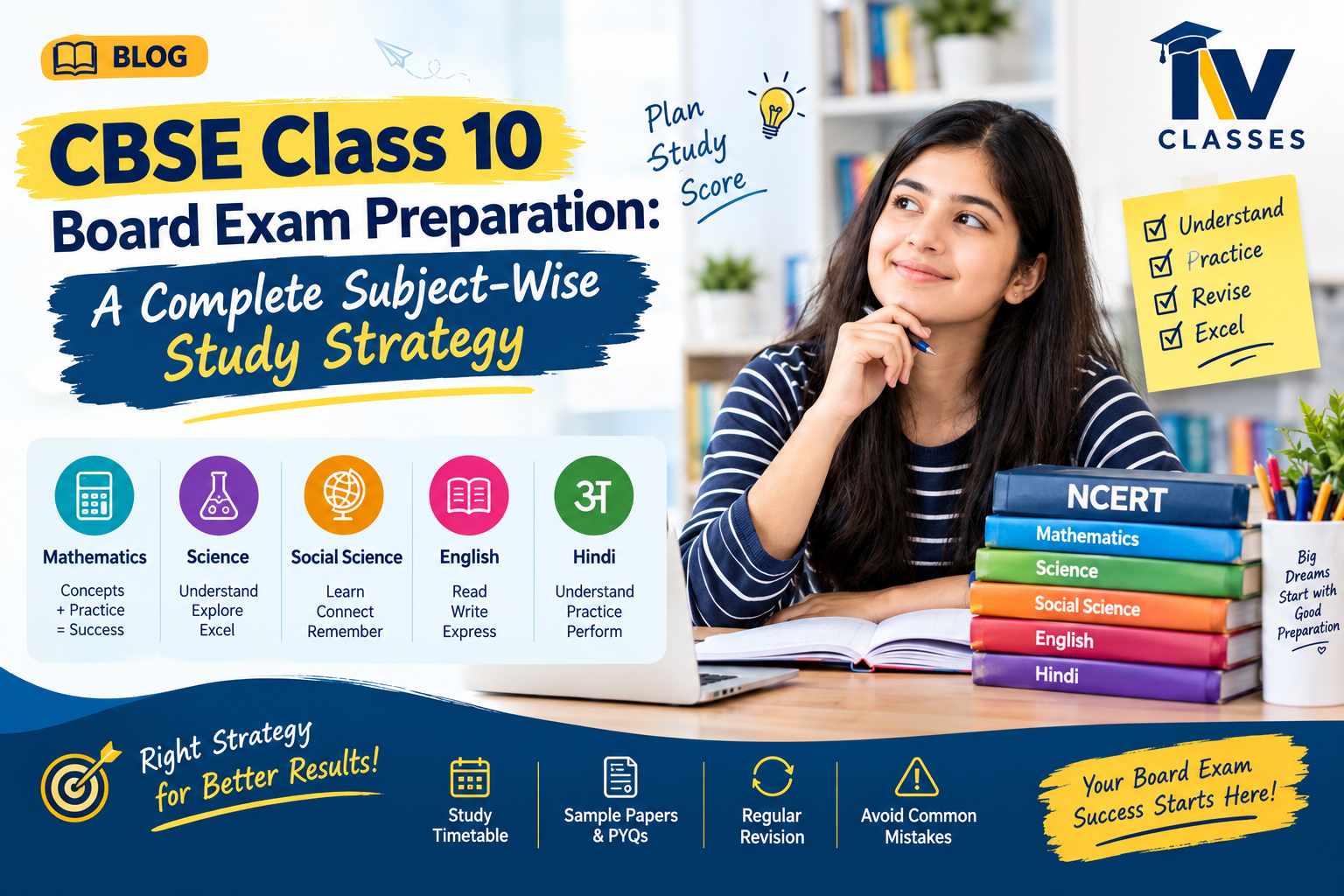
Class 10 is an important academic year, and preparing for board examinations is more than studying for long hours. Students must have a clear plan to complete the syllabus, understand concepts, practise questions, and revise regularly. By having the right strategy, CBSE Class 10 board exam preparation becomes more organised and manageable.
Here in this blog, we have discussed a complete subject wise study strategy for the students that help them prepare effectively for their board examinations.
1. Understand the CBSE Class 10 Syllabus
Before starting preparation, it is important to check the latest CBSE syllabus for every subject. Look at the chapters included in the examination and understand the question paper pattern.
Divide the chapters into three categories – easy, moderate, and difficult. start with the topics that maximum time, while revising familiar chapters regularly. This approach helps students manage their time without neglecting any subject.
2. Subject-Wise Strategy for 10 Class Board Exam Preparation
Every subject requires a different learning approach. Understanding these differences can make preparation more effective.
- Mathematics: This subject needs conceptual clarity, regular practice, and familiarity with formulas. So students instead of simply reading the solutions must try to do them independently. Do more sample papers and mock tests to understand different types of questions asked in the exam. Even 45–60 minutes of daily practice can help a lot.
- Science: Science includes Physics, Chemistry, and Biology, making balanced preparation essential. Students should understand the topics and take help of their teachers to improve their ability to answer unfamiliar questions.
- Social Science: History, Geography, Political Science, and Economics involve different types of information and thus must be remembered thoroughly. Rather than memorising entire chapters, students should organise important concepts into short notes.
- English: English preparation should cover reading comprehension, grammar, writing skills, and literature. Check grammar, spelling, sentence structure, and word limits wherever applicable and students must be able to clearly communicate their understanding effectively.
- Hindi: Students should divide their preparation time between literature, grammar, and writing skills. Avoid leaving language subjects until the final week, try to complete it at least 3-4 months earlier so that you can get enough time to revise the concepts.
3. Create a Practical Daily Study Timetable
A realistic timetable should balance schoolwork, self-study, revision, and practice. Students can adjust the schedule according to their school timings and individual learning needs.
- Mathematics – 60 minutes
- Science – 60 minutes
- Social Science – 45 minutes
- English or second language – 30 minutes
- Revision and mistake review – 15 minutes
This is just a sample routine for CBSE Class 10 board exam preparation and students can make the change as per their needs and preparations.
4. Practise Sample Papers and Previous Years’ Questions
Completing the syllabus is just one part of 10 class board exam preparation. Students must also learn to answer questions within the given time limit. The best way to improve your time skills is to do more sample papers.
Follow these steps:
- Attempt a paper within the given time limit.
- Check answers using the relevant marking scheme.
- Look at the chapters where you have scored the least.
- Focus more on areas that need improvement.
- Do more mock tests to track improvement.
Also refer to the latest official CBSE sample papers and marking schemes for your academic session.
5. Follow a Consistent Revision Plan
Revision must begin alongside syllabus completion. Revisit a topic on the day you study it, review it again after a few days, give a test to evaluate your performance. Use formula sheets, flashcards, mind maps, and short quizzes for more effective revisions.
During the final weeks, prioritise difficult chapters, important concepts, and try to learn from your past mistakes for good results.
Don’t refer to so many study materials and books as it will complicate the things and hamper your studies.
6. Avoid Common Preparation Mistakes
Students can make their preparation more effectives. Some of the most common mistakes students make, include:
- Neglect NCERT books.
- Postpone difficult and big chapters.
- Memorising answers without knowing the logic behind the same.’
- Ignoring regular revision.
- Do sample papers without checking the loopholes.
- Remain stressed.
Conclusion
Effective CBSE Class 10 board exam preparation begins with a clear syllabus plan, subject-wise practice, regular revision, and the right coaching institute. By understanding NCERT concepts, solving sample papers, and reviewing mistakes, students can prepare more confidently and manage examination pressure.
So if you are the one, start your CBSE Class 10 board exam preparation by joining IV Classes that can help you ace your learning skills and get a good score in the exam.
FAQs
When should students start preparing for the CBSE Class 10 board exam?
Students must begin preparing for the exam from the starting of their academic session. This will give them enough time to understand the complete syllabus, revise the concepts, and do sample paper practice.
Is NCERT enough for Class 10 board exam preparation?
NCERT textbooks should be the primary resource. Students who have completed studying from NCERT books can supplement them with official CBSE sample papers, marking schemes, and previous years’ questions.
How many hours should a Class 10 student study daily?
Study hours depend on individual needs and preparation levels. A consistent routine with focused self-study, regular revision, breaks, and adequate sleep is more effective than studying for long hours without a plan.